Kent-Moore J-1541 Oil Pan Trough Gauge and Dipper Height Gauge
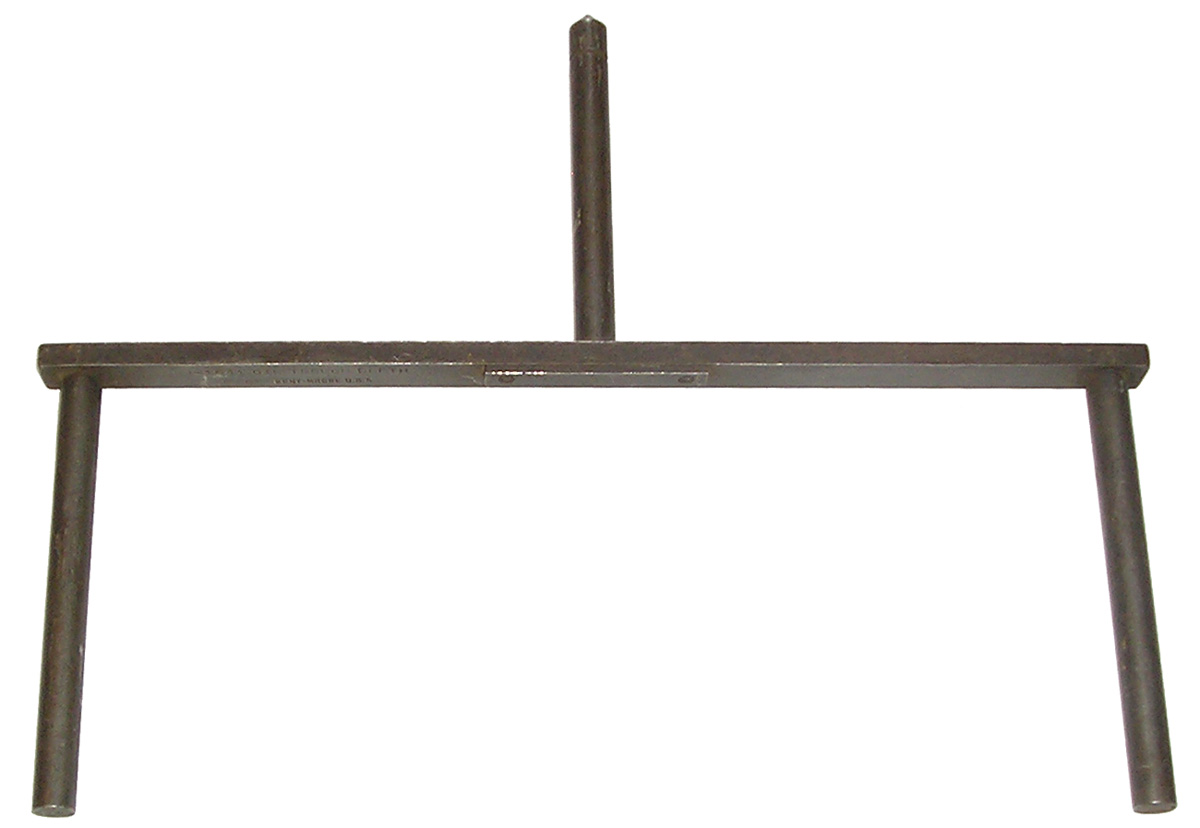
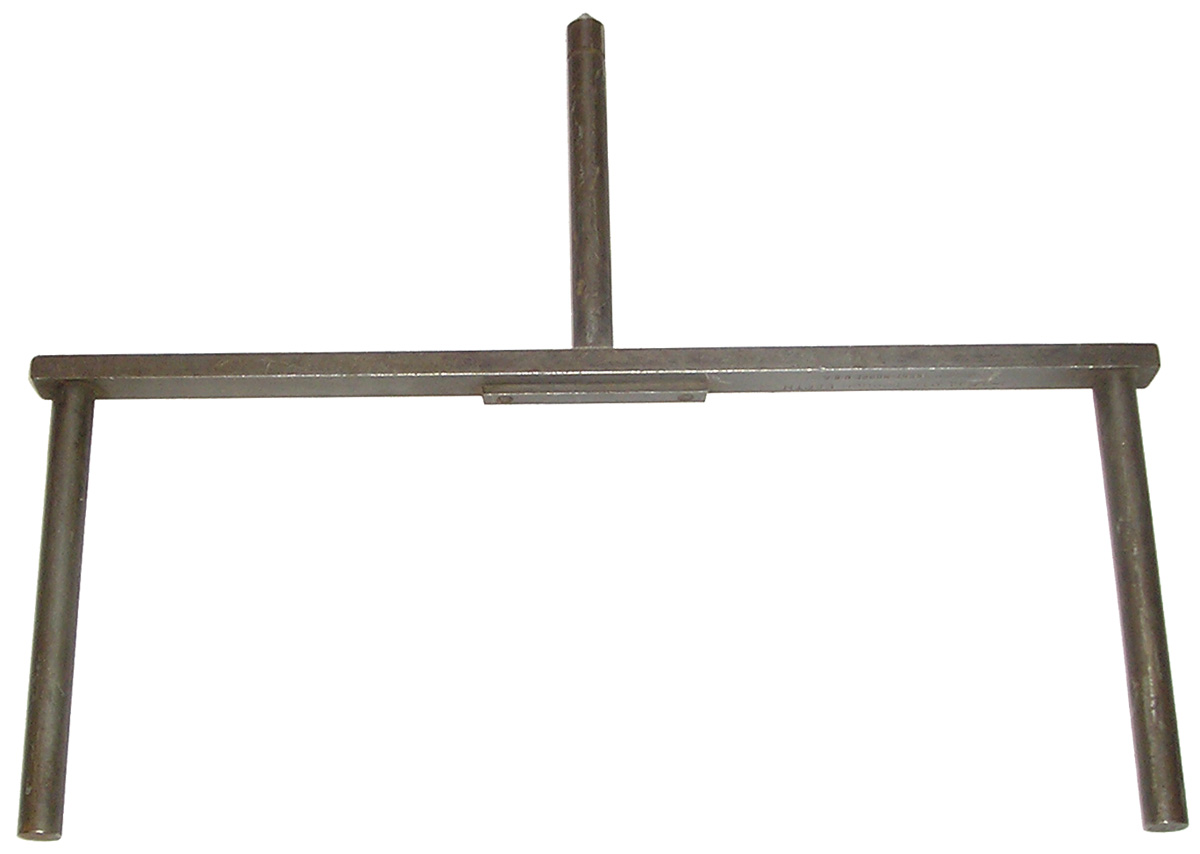
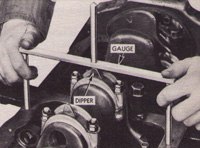
The J-1541 Oil Pan Trough Depth and Dipper Height Gauge is used to check the depth of the oil pan trough with reference to the oil pan flange, and the height of the connecting rod dipper with reference to the machined surface of the crankcase. This tool was developed to accommodate these service operations on the 235 cubic inch heavy duty engine models. Correct motor lubrication is of vital importance for proper engine performance and for economical operation. Every time the oil pan is removed, the oil lines and troughs must be checked to determine that all clearances and depths are in accordance with manufacturer's specifications. The J-1541 gauge is part of the J-2130-B Oil Pan Nozzle Checking Tool Set. Weight 1 lb.
Checking Oil Pan Troughs
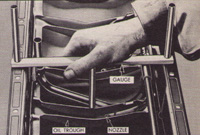
With the oil pan gasket removed, place the gauge on the side rails with the center pin extending into the oil pan. Slide the gauge so that the pin passes over the edge of the trough at its center. Check clearances between the end of the pin on the gauge and the edge of the oil trough. This should not exceed .015" if the trough is in proper adjustment. If the gauge does not pass over the trough, it may be corrected by carefully grinding the edge of the trough. If there is more than .015" clearance between the end of the gauge and the edge of the oil trough, check for loose spot welds where the trough is welded to the oil pan. A loose trough should either be rewelded or the oil pan replaced.
Checking Dipper Heights
With the oil pan removed, turn the crankshaft until the connecting rod is at bottom dead center. With the oil pan gasket removed, place the two side pins of the gauge on the pan rail adjacent to the connecting rod dipper being checked. If the dipper is properly adjusted, the low (or "Go") step of the gauge will pass over the dipper, but the high (or "No Go") step will not pass over it. If the low (or "Go") step of the gauge will not pass over the dipper, it may be lowered by a light tap with a hammer. If the high (or "No Go") step passes over the dipper, a new dipper should be installed. Each connecting rod dipper should be checked in this manner.